Most people who end up needing an iron infusion spent months not knowing why they felt run down. If your bloodwork shows low iron and pills have not fixed it, an infusion delivers iron directly into your bloodstream in about an hour, under the supervision of a licensed medical team. Here is who it helps, how it works and what a visit with us on the Connecticut shoreline actually looks like.
Iron infusions at LIVation at a glance
| Cost | $250 for a 100mg dose, $350 for a 200mg dose |
| Medication | IV iron sucrose, sold as Venofer |
| Visit length | About an hour and a half, including at least 30 minutes of observation |
| Typical plan | One or two infusions, up to six in more stubborn cases |
| What to bring | A recent iron panel or ferritin result |
| Location | 762 Boston Post Road, Madison, CT |
Who typically needs an iron infusion?
Men and women of all ages can need an iron infusion at some point in their lives. The symptoms that usually bring people in are extreme fatigue, shortness of breath and weakness. For women, heavy menstrual bleeding or blood loss during childbirth can drain iron stores, and other common causes include a diet low in iron and blood loss from a past surgery.
Clients on a GLP-1 medication can also run low, because eating less makes it harder to keep up with the body's need for iron.
Iron deficiency is something your provider confirms with bloodwork, not a self-diagnosis, and that is where the next question comes in.
What are the signs of low iron, and what do ferritin numbers mean?
The signs people notice first are persistent fatigue, shortness of breath on mild effort like stairs, pale skin, cold hands and feet, brittle nails, hair shedding, restless legs at night, and sometimes unusual cravings for ice. Any one of these alone can have many causes, which is why the real answer lives in your bloodwork.
Ferritin is the number to know. It is a protein that stores iron safely inside your cells and releases it when your body needs it, and the easiest way to think of it is the fuel gauge in your car. The normal range on a lab report is wide, and many labs and insurance plans only call it a deficiency once ferritin falls to 15 or below. Many clients feel noticeable symptoms below 50, and the range we consider optimal is 50 to 150 ng/mL. That gap is why someone can be told their results are normal and still feel awful. When fatigue, hair loss or other symptoms show up alongside low ferritin, an infusion raises the numbers faster than oral iron alone.
If you have symptoms and have never had ferritin checked, that is the first step, and it is a simple blood draw your primary care provider can order.
Why get an infusion instead of just taking iron pills?
Pills work for plenty of people, and we tell clients that. The trouble is that oral iron often causes constipation and an upset stomach, enough that many people quietly stop taking it. Even when everything goes right, it can take six months or longer before iron labs improve.
An infusion skips the gut entirely, and with IV iron your labs typically improve in weeks rather than months. In our experience iron management works best as a blend of infusions and oral iron, and LIVation can help with both.
What happens during an iron infusion at our Madison, CT clinic?
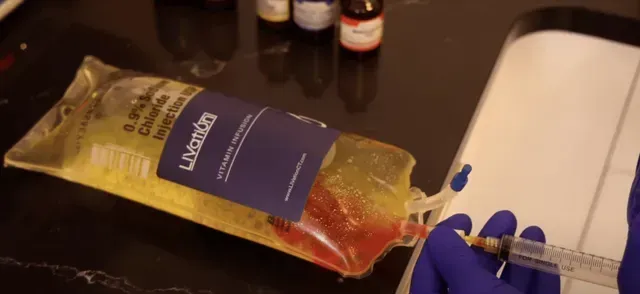
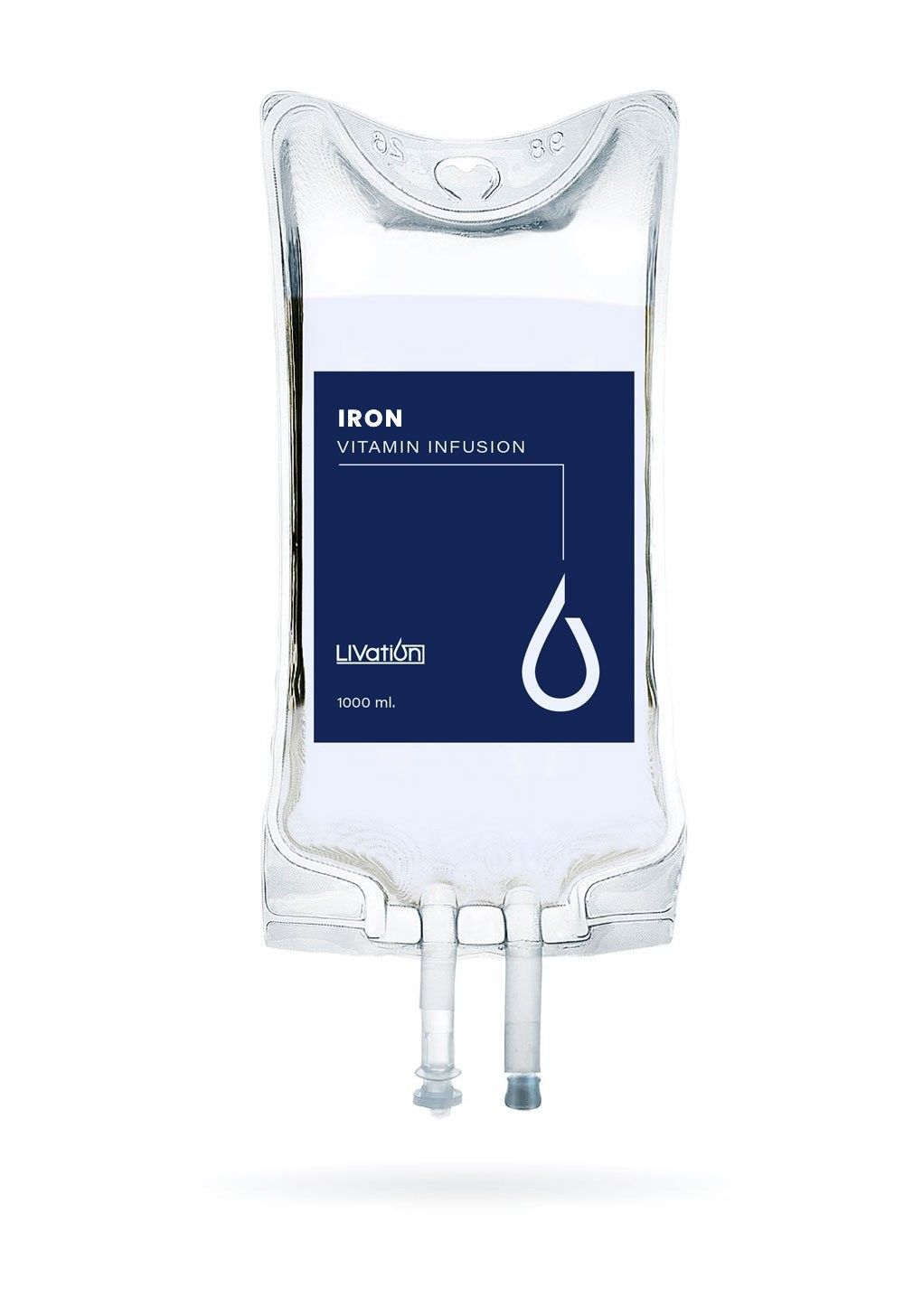
Bring your recent iron panel or ferritin result to your first visit. Our licensed medical team reviews it with you and talks through how many infusions we suggest to bring your ferritin up, because iron infusions are a medical treatment we only provide when the bloodwork supports it. We use IV iron sucrose, sold under the brand name Venofer, in 100mg or 200mg doses. The infusion runs over about an hour while you read, work or relax, followed by at least 30 minutes of observation to watch for any reaction. Plan on about an hour and a half from start to finish.
Reactions are rare, and our medical team reviews the possible side effects with you before your first infusion. Afterward most people drive themselves home and go about their day, and some notice mild soreness at the IV site. Depending on why your iron is low, your plan may be one or two infusions, or up to six in more stubborn cases.
We are at 762 Boston Post Road in Madison, an easy drive from Guilford, Branford, Clinton, Old Saybrook and the rest of the shoreline, and our team has been providing IV therapy in Connecticut since 2019.
How much does an iron infusion cost in Connecticut?
We believe in posting our prices rather than making you call to find out. An iron infusion at our Madison clinic is $250 for a 100mg dose and $350 for a 200mg dose, and if you have never had IV iron before we usually start with 100mg. Most clients need one or two infusions and some need up to six, depending on whether the cause is diet, heavy cycles, blood loss from a past surgery or something else.
What if my iron is too high?
Iron problems run in both directions. High iron is a different medical situation with different causes, and IV iron is never given when iron is already high, which is why the first step is always proper bloodwork and a conversation with a provider.
Common questions about iron infusions
Does an iron infusion hurt?
You feel a small pinch when the IV goes in and usually nothing after that.
How quickly will I feel better?
Iron labs typically improve within weeks with infusions, compared with six months or longer on pills alone. How quickly your energy returns depends on how low you started.
Can I get an iron infusion without a referral?
You can start with us directly. Bring your iron panel or ferritin result, and we only infuse when the bloodwork supports it.
Are iron infusions safe?
Administered by licensed medical professionals with proper screening and monitoring, iron infusions are a routine medical treatment. We go over your history first and watch you throughout the visit, and we will tell you plainly if you are not a candidate.
Where can I get an iron infusion near me in Connecticut?
If you are searching from the shoreline, we are in Madison on Boston Post Road, a short drive from Guilford, Branford, Clinton, Old Saybrook and Westbrook, and clients regularly come to us from New Haven and Middletown as well.
How is this different from a regular vitamin IV?
A vitamin drip is wellness support. An iron infusion is a medical treatment for a documented deficiency, with screening, dosing and monitoring to match.
For more background on iron and how much your body needs, see the iron fact sheet from the National Institutes of Health.